
This tracker covers a sensitive category. Unhide is pattern-insight for self-improvement — never diagnosis, treatment, or medical advice. You'll be asked to confirm you understand this before your first entry.
The pattern your loved one cannot tell you. The data can.
Log a few details each day about the person you care for. our AI shows you the sundowning pattern, the better days, the early-warning behavioural signals, and what to bring to the next memory-clinic review.
"30 days. Cognitive rating averaged 5.8 / 10 across the period. Mornings averaged 7.1, afternoons 5.2, evenings 4.4 — a clear sundowning pattern, logged on 18 o…
6 fields. Done in Two minutes a day. Less on a quiet day..
Fast enough to fit into any routine, specific enough to generate real patterns after 30 days.
Log, build, learn.
Log in Two minutes a day. Less on a quiet day.
One entry. A few taps. The fields are designed so you never have to think about what to fill in.
Build your dataset
Miss a day? Optional email nudge. AI needs 30 entries to find patterns worth reading.
First insight free
AI analysis at 30 entries. Your factors, your dates, your correlations — not a generic article.
9 things Cognitive function (dementia / MCI) reveals about you.
- Whether sundowning is a real pattern in your week — and which hours are the hardest
- Which days are the better days — and what they have in common
- Whether a sudden bad day was an isolated dip or the start of a trajectory
- Whether behavioural changes — agitation, withdrawal, repetition increase, sleep disruption — are increasing
- Whether sleep is shaping the next day's cognition (it usually is)
- Whether a sudden 2-3 day cognitive crash may point to a UTI, infection, or dehydration — these are often reversible
- Which triggers — environmental change, missed medication, visitors, pain — line up with the harder days
- How your own carer load is trending — because you matter too
- Concrete patterns to bring to the next memory-clinic review or GP appointment
Here's what arrives at 30 days.
Illustrative — your analysis uses your own data.
Your cognitive function (dementia / mci) patterns show a clear weekly cycle. AI finds the specific factors affecting your scores — after 30 days, your data tells the story.
“"30 days. Cognitive rating averaged 5.8 / 10 across the period. Mornings averaged 7.1, afternoons 5.2, evenings 4.4 — a …”
People watching their own patterns.
Carers — usually a spouse, partner, adult child, or close relative — looking after someone with mild cognitive impairment (MCI) or early-stage to moderate-stage dementia. Particularly valuable for: carers in the first 6–12 months after diagnosis when the day-to-day pattern is still forming, carers who want to bring concrete data to the 6-monthly memory-clinic review where the clinician has 20 minutes, carers trying to work out whether a sudden bad day is "the dementia" or a UTI / infection / dehydration that is treatable, carers noticing sundowning but unsure how consistent it is, carers watching behavioural change emerge and wanting to track the trajectory, and carers in progressive burnout who need their own load reflected back to them. This is not a diagnostic instrument. It is not a staging tool. It is not a prescription tool. It is a pattern mirror — most useful in partnership with a memory clinic, GP, admiral nurse, and dementia nurse, and least useful as a substitute for any of them. The person being cared for does not need to interact with the tracker; the carer logs on their behalf. Their name is private — encrypted, never sent to the AI, never echoed back. Their dignity is structural to how the tracker is built.
Common questions
Is the Cognitive function (dementia / MCI) tracker medical or diagnostic?
No. Unhide is pattern-insight for self-improvement — not diagnosis, treatment, or medical advice. The AI is explicitly prompted to avoid clinician language. If something concerns you, please talk to your GP.
Does the AI see my entries?
Only when an analysis runs — triggered in-app or delivered to your email. Either way, only your logged data and history is sent, never your personal information. Your data is never used to train any AI model. Full detail in the privacy policy.
What if I miss a day or two?
No streak guilt. Your insights stay accurate; the chart just has fewer dots. The AI explicitly works around gaps in your data instead of pretending they're zeros.
When is my first AI insight free?
At 30 days of entries, and again at 180 days, on every free tracker. Free plan includes 2 trackers — upgrade for monthly or weekly AI runs.
Can I delete everything?
Yes, anytime, no questions asked. Delete a single entry, a whole tracker, or the entire account. Deletion cascades through analyses and exports.
More on Health.

Your Salad Might Be Fine. But Here's What's Actually Worth Watching in Health This Week
A cyclospora outbreak is putting leafy greens under the microscope, GLP-1 users are discovering what a continuous glucose monitor can actually tell them, and functional mushroom supplements are getting a reality check for pregnant and breastfeeding moms.
4 Aug 2026 · 6 min read
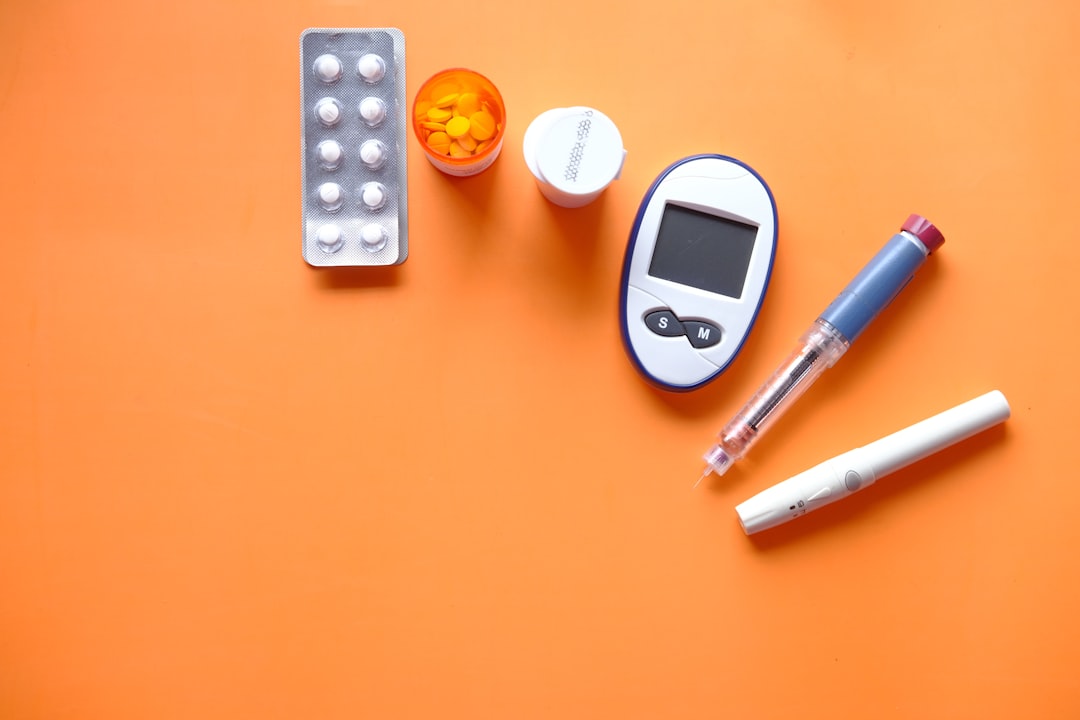
Your Morning Routine, Your Metformin, and That Stubborn A1C: What's Actually Going On
If your blood sugar numbers aren't moving the way you expected, there's a good chance the answer is hiding in plain sight. Here's what the latest research is pointing to.
29 Jul 2026 · 4 min read

Blood Sugar, Fiber, and a Diagnostic Blind Spot Worth Knowing About
New research highlights a gap in standard diabetes testing that affects millions, while nutrition science keeps building the case for fiber as a frontline tool for blood sugar control.
29 Jul 2026 · 2 min read
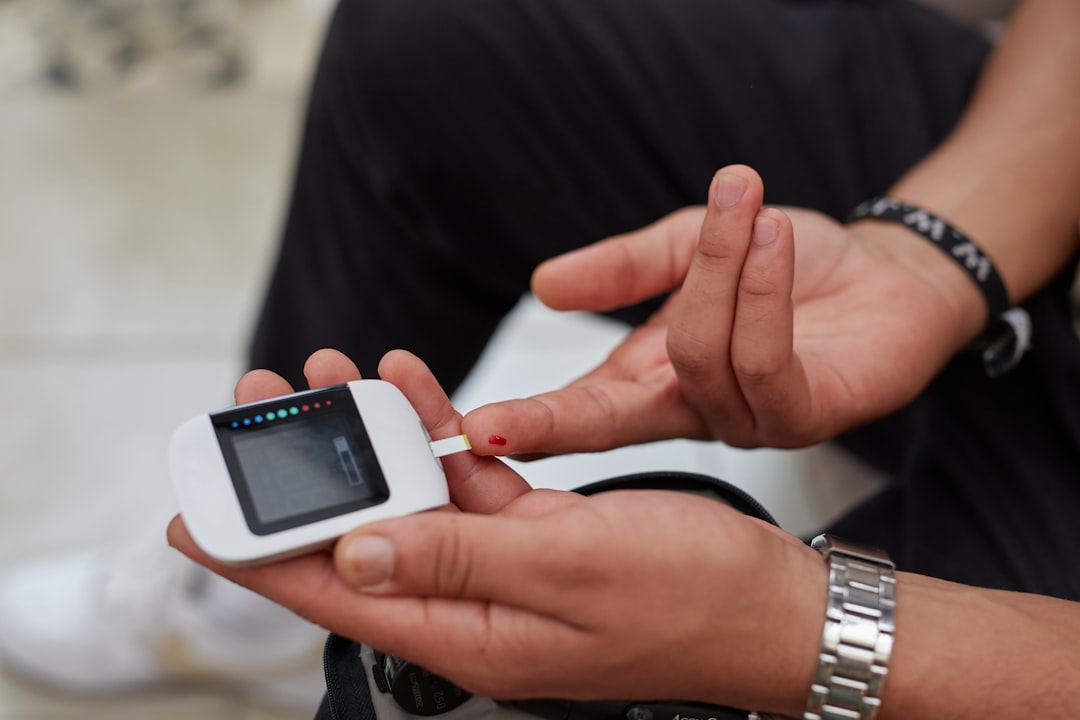
Blood Sugar in 2026: Rings, Injections, and the Case for Fiber
From a prototype smart ring that reads glucose through your skin to the growing complexity around GLP-1 drugs, the blood sugar space is evolving fast. Here's what's signal and what's noise.
29 Jul 2026 · 3 min read

asdf
adfasdf
29 Jul 2026 · 5 min read
Pair with these trackers.
Log meals and symptoms across an elimination diet — and let AI surface the food–symptom links you'd never spot eating-by-eating.
Track independence milestones — what your loved one can still do independently this week — and let AI show trajectory honestly, neither minimising nor catastrophising.
Log readings and what was happening around them — and let AI unhide which foods, walks, contexts, and lifestyle inputs are actually driving your numbers.
Free forever · Plus £7.99/mo · Pro £17.99/mo
Be first when Cognitive function (dementia / MCI) launches
We'll email you as soon as this tracker goes live.